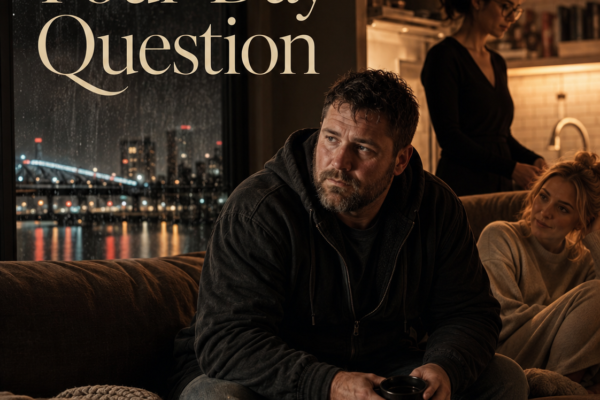
Mila Reyes — Tuesday, May 12, 2026
Mila wakes up before she means to.
Not dramatically. No sudden jolt, no bad dream snapping her upright, no cinematic gasp in the blue-gray half-light. Just the soft, ordinary betrayal of consciousness arriving before her alarm, her mind easing open while her body still wants another twenty minutes.
For a few seconds, she does not move.
The bedroom is quiet in that specific Portland morning way: muted, damp, pale. The light coming through the blinds has no warmth in it yet. It lies across the blanket in thin gray stripes, touching her hip, the edge of her thigh, one bare knee bent out from under the comforter. Somewhere beyond the glass, a car passes over wet pavement. The sound is soft and brief, like someone dragging fabric across the street.
Mila blinks once.
Then again.
Her first thought is not a sentence. It is a feeling.
A small tug inside her chest.
Today needs to belong to me.
She lies there with her cheek pressed into the pillow, hair spilling over her mouth, the room smelling faintly like laundry detergent, skin, old perfume, and whatever candle she had burned the night before. Her phone is beside her on the mattress, face down, tucked halfway under the edge of the sheet like she put it there to hide it from herself.
She knows what will happen when she turns it over.
Notifications. Tiny bids for attention. The world asking to be let in before she has even figured out who she is today.
She lets it wait.
For nearly a full minute, she just breathes.
Her body feels rested but not exactly light. There is that dense, sleepy warmth in her limbs. Her mouth is dry. Her shoulders are a little tight. One foot is cold because it escaped the blanket sometime during the night. She rubs it against her other calf and frowns at nothing.
She thinks about Cody first.
Not because she means to. Not because she has decided to. He simply appears in her mind the way certain people do when they have become part of the architecture of your morning.
She imagines him already gone or getting ready somewhere else in the rhythm of work. The alarm. The boots. The heavy practicality of his day. The way his life begins with motion whether his heart is ready or not.
There is affection in the thought. A little ache too.
Then Sloane.
Sloane enters differently. Cleaner. Sharper. Like the click of a lamp turning on in a dark room.
Mila pictures her moving through the apartment with quiet purpose, already aware of things before anyone else says them. A mug in her hand. Her hair neat enough to look accidental. Her face unreadable until it isn’t.
Mila exhales through her nose.
“Okay,” she whispers to the ceiling.
It is not clear what she is agreeing to.
The day, maybe.
Herself, hopefully.
She reaches for the phone.
The screen lights up too brightly, even on low. She squints and tilts it away from her face. A few messages. A few app notifications. A delivery promo. A reminder she set for herself and immediately resents. Instagram. A reel from a friend. A heart on something old enough that the person had clearly been looking.
That one catches her.
She opens it.
She tells herself she is only looking because the notification is there, not because she cares.
It is a man she barely thinks about anymore. Not important. Not dangerous. Not even especially tempting. Just familiar enough to make her brain tilt its head.
He liked a photo from weeks ago.
That is all.
Mila stares at it, expression flat.
Then she closes the app.
Then she opens it again.
Then she closes it harder, as if her thumb can make a moral point.
“Girl,” she murmurs to herself, voice rough from sleep. “Please.”
But the truth is already moving through her.
She does like being noticed.
Not by him specifically. Not in a way that means she wants to do anything about it. But there is a little spark in being seen from outside the apartment, outside the emotional ecosystem of Cody and Sloane and the life they are building. It reminds her she has edges. That the world still recognizes her as separate.
And that is the thing she is afraid to admit.
She does not want to leave.
She does not want to disappear either.
That is the whole problem.
She sets the phone down and finally sits up.
The room tilts for half a second. Her hair falls around her face. She pushes it back with both hands and sits there, hunched and soft, blinking at the floor.
Her schedule is not complicated today, but it has shape.
Coffee. Shower. Get dressed. Pick up a few things for the apartment. Return the thing she bought last week and immediately hated. Groceries. Maybe flowers. Maybe a thrift stop if she still feels restless. Maybe a walk if the weather holds. Message Sloane about coffee later. Send Cody something warm but not needy. Make the apartment feel less like a place everyone passes through and more like a place that wants them back.
That is the practical list.
The private list is harder.
Figure out why she feels watched even when no one is watching.
Figure out why attention still works on her.
Figure out whether love can be soft without becoming a cage.
Figure out whether she is happy.
That last one makes her look toward the window.
She is not unhappy.
That almost makes the question worse.
Because when you are unhappy, you know what to blame. When you are mostly happy, but still restless, the blame gets slippery. It hides under good things.
She gets out of bed.
The floor is cold enough to make her shoulders rise. She pads across the room and pulls open a drawer, then stands there staring into it like the drawer is supposed to tell her who she is. Folded shirts. Leggings. Socks. A black tank. A soft cream sweater. A pair of jeans draped over a chair because she wore them for ninety minutes and decided they were not dirty enough to wash or clean enough to put away.
She grabs the oversized shirt she slept in and tugs it down at the hem, then goes into the bathroom.
The mirror catches her before she is ready.
There she is.
Mila Reyes at the beginning of a Tuesday. Blonde hair messy and uneven from sleep. One cheek faintly creased from the pillow. Lips a little puffy. Eyes soft but alert. Bare shoulders under the wide neck of the shirt. A face pretty enough that people have made assumptions about her all her life, but not polished enough this morning to hide the little human underneath.
She leans closer.
There is mascara under one eye.
“Cute,” she says dryly.
She wets a washcloth and presses it to her face. Warm water first, then cooler. She rubs gently under her eyes, over her cheeks, along her jaw. The contact wakes her up more than the light did. She brushes her teeth with one hand braced on the sink, staring into the mirror with that blank domestic intimacy people only have with themselves.
Her mind wanders.
She thinks of Cody’s hands.
Not in a wild, cinematic way. In a grounded one. The warmth of them. The size. The way being touched by someone who actually knows you is different from being wanted by someone who only imagines you.
There is a little pulse of want in her stomach.
Not urgent. Not explicit. Just there.
She misses being looked at by him when he is not distracted by the world. She misses the version of his attention that does not ask anything of her except to be near. She wants him tired but affectionate tonight. She wants his voice lower. She wants the feeling of being pulled close without needing to explain why she needed it.
Then she thinks of Sloane seeing all of that.
Not interrupting it. Not judging it exactly. Just knowing.
Mila spits toothpaste into the sink and rinses.
There are forms of intimacy that make her feel naked even fully dressed.
Sloane has that effect.
She starts the shower and waits for the water to warm. Steam slowly clouds the mirror. She stands with one hand under the spray, testing it, then steps in.
The shower is where her thoughts get loud.
Water hits the top of her head and runs down her back. Her hair darkens immediately, sticking to her shoulders. She closes her eyes and lets the heat flatten her. For a minute, she does nothing but stand there.
She imagines washing yesterday off.
Not because yesterday was bad.
Because every day leaves fingerprints.
She shampooes slowly, fingertips pressing into her scalp. The smell is clean and floral, a little too sweet, something she bought because the bottle looked pretty. She tips her head back and lets the water run through her hair, down her neck, over her collarbone. Her body relaxes by degrees.
Her thoughts sort themselves into sharper lines.
She wants the apartment to feel good when everyone gets home.
She wants Sloane to know she is not competing with her.
She wants Cody to feel welcomed, not managed.
She wants herself to stop performing cheerfulness every time she senses tension.
That one lands hard.
She opens her eyes.
The tile is foggy. The shower curtain clings slightly near her leg. The fan hums above her. This is not an important moment from the outside. No one would mark it as anything. But inside Mila, something small shifts.
She is tired of being the emotional lighting in the room.
Warm. Pretty. Flattering. Always adjusting so everyone else can look better.
She rinses conditioner from her hair and says, quietly, “Nope.”
The word echoes against the tile.
Not angry.
Decisive.
When she gets out, the bathroom is steamy and close. She wraps herself in a towel and wipes a clear patch on the mirror with the side of her hand. Her reflection appears in a blur, then sharpens.
She looks less sleepy now. More herself.
She does her skincare at the sink. Serum. Moisturizer. Sunscreen. Each step small and automatic. Her face under her hands. The gentle pull at her cheeks. The cool slick of product. The little pat under the eyes. She clips her damp hair up and walks back to the bedroom wrapped in the towel, leaving faint footprints behind her.
Now comes the outfit.
This matters more than she wants it to.
Not because she is trying to impress anyone. That is what she tells herself. But clothes change the way the day touches her. Too soft and she feels like she never started. Too dressed and she feels like she is auditioning for a life she does not actually want. Today she needs something that says: I am available to the world, but not desperate for it.
She chooses light-wash jeans first, then rejects them because the waistband feels like a negotiation.
Black leggings.
No. Too indoor.
Back to the jeans.
She puts them on and stands in front of the mirror, towel still wrapped around her upper body. The jeans sit right. Casual, fitted, familiar. She pulls out a white tank, then a soft oatmeal cardigan, then changes the tank for a pale blue one because the white feels too obvious.
She puts on the pale blue tank.
Looks.
Tilts her head.
Adds the cardigan.
Better.
The cardigan falls loose off one shoulder when she moves. She considers fixing it, then lets it stay. She likes looking a little undone if the rest is intentional.
Simple gold hoops. A thin necklace. Rings. White socks. Sneakers that are clean enough. She blow-dries the front pieces of her hair and lets the rest air-dry into soft waves, then uses a little product to tame the frizz around her face. She fixes the public version of her hair with more care than she admits to herself.
The final effect is exactly what she wanted.
Pretty, but not trying too hard.
Soft, but not fragile.
She takes a mirror photo and immediately hates it. Takes another. Better. Does not post it. Saves it anyway.
In the kitchen, the apartment feels cooler than the bedroom. The counters hold the small evidence of shared life: a mug in the sink, a folded paper towel, keys that are not hers, a receipt near the fruit bowl, one lonely banana going freckled.
Mila starts coffee.
The machine makes its little clicking, groaning sounds. She stands in front of it with her arms folded, watching dark liquid gather in the pot like she has never seen coffee happen before. The smell fills the kitchen slowly and changes the whole mood of the room.
While it brews, she checks her phone again.
The man who liked her old photo has not messaged her.
She is relieved.
She is also faintly insulted.
She laughs at herself this time.
That is progress.
She opens her text thread with Sloane.
The cursor blinks.
Mila types:
Coffee later? Just us for a bit?
She stares at it.
The words feel too simple for how much they mean.
She sends it before she can dress it up.
Then Cody.
She opens his thread and pauses longer.
There are a dozen versions of what she wants to say.
Hope your day is okay.
Too plain.
Miss you.
Too exposed at this hour.
Come home alive, truck boy.
Too flippant, though she smiles at it.
Finally she types:
Hope today’s treating you decent. I’m going to run around and make the apartment feel less feral. Come home hungry later.
She adds a small heart.
Then deletes it.
Then adds it back.
Sends.
Her chest warms after she sends it, which annoys her because she likes being independent in theory and apparently pathetic in practice.
The coffee finishes. She pours it into her favorite mug, adds cream until it turns the color she likes, then takes the first sip standing in the kitchen.
Too hot.
She burns her tongue a little.
“Every time,” she says.
Sloane replies while Mila is buttering toast.
Yes. What time?
Mila feels something unclench.
Not because the answer is dramatic. Because it is clean. No weirdness. No delay loaded with meaning. Just yes.
She types back:
After errands? Maybe 2? I can meet you or bring something back.
Sloane:
Bring something back. I’ll be here.
Mila reads it twice.
I’ll be here.
There is something about those three words.
Not romantic exactly. Not casual either. Steady.
Mila sets the phone down and butters the toast all the way to the edges.
By 10:18, she is out the door.
The hallway smells faintly like someone else’s breakfast and old carpet. She locks the apartment behind her and checks the knob even though she knows it locked. Outside, Portland greets her with damp air and low clouds. The kind of day that cannot decide if it wants to rain or simply threaten to.
She inhales.
The air smells like wet pavement, leaves, exhaust, and coffee from somewhere nearby.
She likes it.
There is a comfort in a city that does not demand sunshine from you.
Her first stop is the return. Practical, boring, necessary. She has the receipt folded in her purse and the item in a tote bag banging lightly against her leg as she walks. At the store, the automatic doors slide open with a sigh. Fluorescent light replaces the gray morning. Carts rattle. Someone’s child is upset in aisle three. A woman near the entrance is talking too loudly into one earbud.
Mila stands in the return line and watches people.
She always watches people.
Not in a judgmental way. More like collecting evidence. The older man buying batteries and a single greeting card. The young couple silently irritated with each other over something that started before they came in. The employee behind the counter trying to keep her face pleasant while clearly living somewhere else inside her head.
Mila wonders how many people are walking around with private weather no one can see.
Then she thinks: everyone.
When it is her turn, the return takes two minutes. No problem. No confrontation. The employee scans the receipt, takes the item, gives her the confirmation.
A tiny task completed.
Mila feels disproportionately accomplished.
Next, she wanders.
This is dangerous.
She came in for a return and paper towels. She leaves the return counter and lets herself drift through the home section, pretending this is still task-related.
She touches a ceramic bowl she does not need. A linen throw pillow. A candle called something ridiculous like Rainwashed Fig or Salted Amber. She opens it and smells.
Too sweet.
Another.
Too sharp.
Another.
There.
Warm, clean, a little smoky. Not feminine exactly, not masculine, not seasonal. Just comforting. It smells like a room after everyone has stopped performing.
She puts it in the cart.
Then flowers.
The small grocery section has cheap bouquets near the front, their petals bright against plastic sleeves. Most are too cheerful. Yellow daisies, pink carnations, roses dyed in a way that makes them look embarrassed. Then she sees a mixed bouquet with cream flowers, eucalyptus, soft peach, a little green.
Not perfect. But close.
She picks it up and holds it against her chest while she looks for paper towels.
That is when her phone buzzes.
Instagram DM.
For one second, she knows who it is before she looks.
Evan.
Her stomach dips.
Not because she loves him. Not because she wants her life rearranged by him. Because old attention has a scent. It finds the part of you that remembers being unfinished.
She opens it.
Saw something that reminded me of you today. Hope you’re good, M.
That is it.
Small. Safe. Expertly harmless.
Mila stands in the aisle with paper towels on one side and laundry detergent on the other, bouquet tucked in her arm, reading the message like it is longer than it is.
Her first feeling is not desire.
It is curiosity.
Then vanity.
Then irritation at the vanity.
Then a little thread of lust, but not cleanly for Evan. More for the version of herself he summons: spontaneous, wanted, capable of making someone from her past reach across silence just to see if the door is still there.
She pictures answering.
What reminded you of me?
That would open it.
Not a lot. Just enough.
The door would not swing wide. It would crack. Air would move. Something old would breathe.
She locks her phone.
Drops it into her purse.
Picks the paper towels.
Keeps walking.
Her heart beats a little harder for the next three aisles.
This is the surprise of the day, though no one else would call it one. No confetti. No twist of fate. Just a message from a man who used to know how to pull a string inside her and hear the bell ring.
At checkout, she puts the candle, paper towels, flowers, oat milk, a bag of clementines, and a soft gray dish towel on the belt.
The dish towel was not on the list.
Neither were the clementines.
The cashier says, “These are pretty,” about the flowers.
Mila looks down at them.
“Yeah,” she says. “They felt like they wanted to come home.”
The cashier laughs politely, but Mila means it.
Outside again, the air feels better than the store. She carries everything to the car and puts the bouquet gently across the passenger seat like it is a person she is responsible for.
Before starting the car, she checks the DM again.
Still there.
Still unanswered.
Her thumb hovers.
She opens Cody’s thread instead.
No reply yet.
He is working. Of course he is working.
She opens Sloane’s.
Nothing new there either.
Then she opens the DM one more time.
She types:
That’s sweet. Hope you’re good too.
She stares at it.
It is polite. Closed enough. Not inviting. Not cold.
Still, it gives him something.
She deletes it.
She does not answer.
Instead, she starts the car.
The next stop is coffee, even though she had coffee at home. This is different. Home coffee is survival. Outside coffee is ritual.
She goes to a small café with windows fogged at the corners and a chalkboard menu written by someone with aggressive handwriting. The place smells like espresso, baked sugar, damp jackets, and old wood. A man near the window is working on a laptop with the seriousness of someone composing either a screenplay or an email to his landlord. Two women at a corner table are laughing with their whole bodies. A barista with tired eyes calls someone’s name wrong.
Mila orders an iced latte and a pastry she does not need but absolutely wants.
While she waits, she looks around and feels that strange, lonely pleasure of being alone in public. No one needing her. No one interpreting her. No one asking why she got quiet.
Her phone buzzes.
Cody.
That sounds dangerous. Apartment’s gonna have throw pillows by sundown. I’ll come home hungry.
Mila smiles before she can stop herself.
A real smile. Small but immediate.
There it is.
Warmth.
Not the cheap spark of being noticed by someone from the past. Not the restless glitter of the DM. This is different. Domestic. Known. A little ridiculous. The kind of message that belongs to a life, not a fantasy.
Her drink is called.
She picks it up and sits near the window with the pastry on a small plate. The first bite flakes onto her fingers. Butter. Sugar. Raspberry. She closes her eyes for half a second.
Fulfillment, she realizes, is not always a grand emotional arrival.
Sometimes it is a pastry eaten alone beside a window while your phone holds one good message and one unanswered temptation.
She texts Cody back:
One throw pillow. Maybe two if the city tests me.
Then, after a pause:
I liked hearing from you.
She sends it before she can make it cuter.
Then she puts the phone face down.
This is another little decision.
Do not hover.
Do not turn every message into a weather system.
Live the hour you are in.
So she does.
She eats slowly. Watches condensation slide down the plastic cup. Watches a dog outside pull its owner toward a tree with urgent spiritual purpose. Watches the two laughing women gather their things, still talking over each other, one touching the other’s sleeve as they leave.
Mila feels a small ache watching them.
Friendship. Ease. A whole language built out of interruptions.
She thinks of Sloane again.
At 12:26, Mila leaves the café and heads to the thrift store.
She does not need anything there. That is the point. Need is too narrow. Thrift stores are for possibility. For touching the edges of other lives. For finding something that should not have been waiting for you but was.
Inside, the store smells like dust, fabric, and faint incense. Racks stand crowded under buzzing lights. A song from the early 2000s plays overhead, making everyone seem slightly younger and sadder. Mila moves slowly through the aisles, sliding hangers one by one.
A denim jacket. Too stiff.
A cream blouse. Pretty, but wrong.
A black slip dress. She pauses.
The fabric is soft, simple, cut in a way that would skim rather than cling. Not loud. Not clubby. Quietly dangerous.
She holds it up.
For a second she imagines wearing it at home, barefoot, hair loose, Cody looking up and forgetting whatever he was saying. She imagines Sloane noticing too, not with surprise but with that little stillness she gets when something lands.
Mila feels heat rise lightly in her face.
There is lust there.
Not crude. Not reckless.
Lust for being wanted in her own home without having to become a performance. Lust for the moment when the room changes because she entered it. Lust for Cody’s attention. Lust for Sloane’s quiet approval. Lust for herself, honestly — for the version of Mila who can stand in a black slip dress and not apologize for knowing exactly what she is doing.
She puts the dress over her arm.
Then finds a small brass frame. A little scratched. Beautiful.
Then a book of poems with someone’s handwriting in the front cover.
For L.,
You always notice the light.
— M.
Mila stands very still.
There is the second surprise.
Not the book itself. The inscription.
You always notice the light.
She reads it three times.
Something about it makes her throat tighten.
Maybe because it feels like a message from a stranger directly into her day. Maybe because she wants to be someone who notices the light. Maybe because she wants someone to notice that she notices.
She buys the dress, the frame, and the book.
In the car, she photographs the inscription and sends it to Sloane.
Found this. Felt like you.
Sloane replies after two minutes.
That’s beautiful. Also accurate. I do notice the light.
Then:
You okay today?
Mila looks at the question.
There it is.
The thing she had been circling without naming.
She could lie. Easily. Kindly. Reflexively.
Yeah! Just running around.
Instead she types:
I am. Just trying to feel like myself today.
She watches the message deliver.
Sloane does not answer right away.
Mila starts the car, but does not pull out.
Then Sloane replies:
Good. Bring that version home.
Mila’s eyes sting.
She laughs once, quietly, because crying in a thrift store parking lot over six words from Sloane feels both absurd and completely reasonable.
Bring that version home.
That answers one of the questions.
Not all of them.
Enough.
She does not have to choose between being herself and belonging there.
At least not today.
At 1:37, she goes to the grocery store.
This is the least romantic part of the day and somehow the most revealing. Grocery stores have a way of showing people what they think a life is supposed to feel like.
Mila gets a cart with one bad wheel. It ticks softly as she pushes it.
Tick. Tick. Tick.
She buys pasta because dinner should be easy. Greens because she wants to feel virtuous. Bread because bread is honest. Chicken. Lemons. Parmesan. A jar of olives. Sparkling water. A pint of strawberries that smell faintly sweet when she lifts the container. Dark chocolate. More coffee. A bunch of basil she has no plan for but wants anyway.
She moves through the store imagining the evening.
Cody coming home. Boots. Tired face. Hungry. The shift from work-self to home-self.
Sloane at the counter, watching Mila unpack, pretending not to be pleased by the flowers.
Mila making pasta with lemon and chicken and too much parmesan. Music on. Candle lit. Someone stealing a strawberry before dinner. Someone leaning in the kitchen doorway. Someone laughing.
The fantasy is not extravagant.
That is what makes it powerful.
She does not want a yacht. She does not want a hotel room in another country today. She does not want Evan’s half-open door. She wants a clean counter, a warm pan, a pretty dress waiting in the bedroom, and the feeling that the people she loves are not measuring each other for exits.
At checkout, she realizes she forgot paper towels already bought in the car and nearly buys more.
She stops herself.
Growth.
By 2:08, she is home.
The apartment receives her quietly.
She makes two trips from the car. The first with grocery bags cutting into her fingers. The second with flowers, candle, thrift bag, and the paper towels balanced badly against her hip. She bumps the door open with her shoulder, sets everything down, and stands in the living room for a moment.
Now the task becomes transformation.
This is where Mila is good.
She puts groceries away first. Cold things in the fridge. Pantry things where they belong. Strawberries rinsed and laid on a towel. Basil in a glass of water because she saw someone do that once and it made her feel like the kind of woman who knows what she is doing.
Then flowers.
She trims the stems at an angle, fills a vase, arranges them, rearranges them, pulls one piece of eucalyptus forward, turns the vase, frowns, turns it again. When she places them on the table, the room changes.
Not a lot.
Enough.
She lights the new candle and watches the flame gather itself.
Then she puts the thrifted brass frame on a shelf even though it has no photo in it yet. An empty frame should feel sad, but this one does not. It feels like intention. Like something is coming.
The poetry book goes on the coffee table.
The black slip dress stays in the bag.
For now.
At 2:31, Sloane emerges into the kitchen.
She is dressed simply, hair pulled back, glasses on, presence calm enough to make the room stand straighter. She looks at the flowers first. Then the candle. Then Mila.
“You made it softer,” Sloane says.
Mila is standing by the counter with damp hands from washing basil.
“That was the goal.”
“It worked.”
Mila feels ridiculous pleasure at that.
She pours coffee for Sloane, even though it is afternoon and neither of them needs more coffee. They sit near the window with their mugs, the city gray behind them, the apartment warmer now than when Mila left.
For a while, they talk about ordinary things.
The store. The ugly candle names. The thrift find. The poem inscription. Dinner. Whether the flowers are trying too hard. Whether Cody will notice the dish towel. Whether men notice dish towels. Whether Cody specifically might, because Cody notices odd things when he is emotionally tuned in and misses obvious things when he is tired.
Then the conversation quiets.
Mila wraps both hands around her mug.
Sloane watches her.
Not aggressively. Just fully.
“You said you were trying to feel like yourself today,” Sloane says.
Mila looks into the coffee.
“Yeah.”
“Did it work?”
Mila thinks about the morning. The shower. The DM. The dress. The inscription. Cody’s message. Sloane’s reply. The flowers on the table.
“I think so,” she says. “More than I expected.”
“What helped?”
Mila smiles faintly.
“Not answering something I wanted to answer.”
Sloane understands too quickly.
“Evan?”
Mila looks up.
There is no accusation in Sloane’s face. That almost makes it harder.
“Yeah.”
Sloane nods once.
“What did he want?”
“Nothing. That’s the thing. It was barely anything.”
“But it pulled.”
Mila swallows.
“Yeah.”
Sloane takes a sip of coffee and sets the mug down.
“Do you want him?”
Mila answers slower than she expects.
“No.”
Then, more honestly:
“I wanted to be wanted by him for like ten seconds.”
Sloane’s face softens by one degree.
“That’s different.”
“I know.”
“Still dangerous if you pretend it isn’t.”
Mila looks toward the flowers.
“I didn’t answer.”
“I know.”
“How?”
“Because you’re telling me calmly.”
Mila laughs under her breath.
“That’s annoying.”
“Yes,” Sloane says. “I’ve heard.”
And there it is.
The softness Mila wanted. Not syrupy. Not dramatic. Just real enough that she does not have to contort herself.
The question in her chest gets another answer.
Can she bring the restless, vain, tempted, soft, wanting version of herself home?
Yes.
At least to Sloane.
At least today.
By late afternoon, the apartment has entered that golden-gray hour before evening where everything feels suspended. Mila changes out of her jeans because she has completed the public-facing portion of the day and no longer owes denim anything. She puts on soft lounge pants and a fitted tank while she starts dinner prep, then keeps glancing toward the thrift bag in the bedroom.
The black slip dress waits there like a secret.
She chops garlic.
Washes greens.
Zests a lemon.
The kitchen fills with the bright scent of citrus and the deeper smell of butter warming in a pan. She plays music low, something warm and slightly sad. Sloane sits at the counter for part of it, reading the poetry book and occasionally reading a line aloud without commentary.
Mila likes that.
The apartment feels inhabited.
Not staged. Not perfect. Lived in.
At 5:46, Cody texts that he is on his way.
Mila reads it and feels the day sharpen.
She does not immediately respond. She washes her hands. Dries them. Goes to the bedroom.
The black slip dress is still in the thrift bag.
She takes it out.
The fabric slides over her hands, cool and soft. She holds it against herself in the mirror. It is not too much. That is what decides it. It is not costume. It is not performance. It is simply a little more honest about the part of her that wants to be wanted.
She changes.
The dress falls simply, skimming her body. She leaves her hair down now, mostly dry, softer around her face. No heavy makeup. Just a little lip color, a touch under the eyes, enough to look awake and warm.
She studies herself in the mirror.
There is the lust again.
But it has changed.
It is no longer reaching outward for proof. It is rooted in her own skin.
She wants Cody to see her.
She wants Sloane to see that she chose herself before anyone else chose her.
She wants the evening to hold.
When she walks back into the kitchen, Sloane looks up.
For one second, Sloane says nothing.
That is better than a compliment.
Then she says, “That was thrifted?”
Mila leans against the counter.
“Seven dollars.”
“Obscene.”
“The price or me?”
Sloane looks back at the book, mouth almost smiling.
“Yes.”
Mila feels heat bloom in her cheeks and turns back to the stove, pleased beyond reason.
Cody comes home while the pasta water is boiling.
The sound of the door changes the whole room. Keys. Door. Footsteps. The practical heaviness of a workday entering a softened apartment.
Mila does not rush to him.
She turns from the stove with a wooden spoon in her hand, dress catching lightly against her thigh, hair loose, candle burning behind her, flowers on the table.
Cody sees her.
He stops for half a beat.
That is all she needed.
Not a speech.
Not worship.
Just that tiny interruption in him. That visible moment where the day he came from meets the woman in front of him and loses its place.
“Hey,” Mila says.
Her voice comes out softer than she planned.
The answer to the day arrives quietly.
She did find fulfillment.
Not because everything got solved. It did not.
Evan still exists. Her hunger for attention still exists. Cody’s intensity still exists. Sloane’s sharpness still exists. The future still has all its little locked doors.
But Mila moved through the day without abandoning herself.
She woke up restless and did not punish herself for it.
She wanted attention and did not hand herself over to the easiest source.
She bought flowers for the apartment and a dress for the part of herself that still wants to feel electric.
She told Sloane the truth.
She let Cody come home to warmth instead of a test.
She learned that the soft version of her does not have to be the smallest version.
Dinner is not perfect.
The pasta sticks slightly because she gets distracted. Cody teases her about the throw pillow threat even though she did not buy one. Sloane claims the dish towel is objectively good. Mila eats too many strawberries before the meal is fully on the table. Someone spills sparkling water. The candle burns unevenly. The flowers lean a little too far left.
And somehow, because of all that, the apartment feels alive.
Later, when dishes are half-done and music is still playing, Mila stands at the sink with warm water running over her hands. Behind her, Cody and Sloane are talking about something small. Their voices overlap. Not tense. Not perfect. Just present.
Mila looks at the dark window above the sink and sees her reflection layered over the room behind her.
Her face. The dress. The flowers. Cody. Sloane. The candle. The mess.
For once, she does not feel split between the woman being watched and the woman doing the watching.
She is both.
She is in the room.
She is in her life.
And the final thought of the day, the one that settles deepest, is not a question anymore.
I can be loved here and still belong to myself.